
Months ago this Substack was mostly about helping companies adopt AI without losing their people. That is still true. The consulting work is still the consulting work. Build Weeks are still Build Weeks. The CEOs of Swiss scaling startups are still the people I spend most of my professional Tuesdays with.
But something else has been building underneath, and pretending it isn’t there has started to feel dishonest.
So I want to name it.
The bigger question I’ve been working on
There’s a question I keep returning to. In client rooms. In podcast recordings. In late-night conversations with other people building things with AI:
What becomes possible when humans and machines create together, and what stays irreducibly human?
That sentence has been the through-line of my work for longer than I realized. Every Build Week I run is one specific answer to it. Every coaching conversation with a CEO is another. The podcast I’ve been quietly preparing for months is the same question asked of people who are answering it in different domains.
The work was always already this. The newsletter is just catching up to it.
What you’ll see on this list
The list is going to start showing up differently. I’m finally writing what I’m actually thinking about, instead of writing the narrower version that fit the original tagline. Three strands underneath the same question.
Building with AI. Practical pieces about shipping real things (particularly with Claude Code) and the agents that come after it. Where the work gets lumpy. What kinds of hooks turn a half-built thing into a finished one. Why most automation projects stall in the same three places. This is also where the Mundaine Dojo lives. An education space I’m putting together for individuals, solopreneurs and small companies who want to learn to ship instead of watch demos.
B2B AI adoption. Same audience as before. Scaling startups, capability gaps, the actual mechanics of getting a company from “we have ChatGPT licenses” to “AI is changing how decisions get made here.” Case studies, autopsies, the patterns I see across clients. This part stays, just now sitting underneath a wider question.
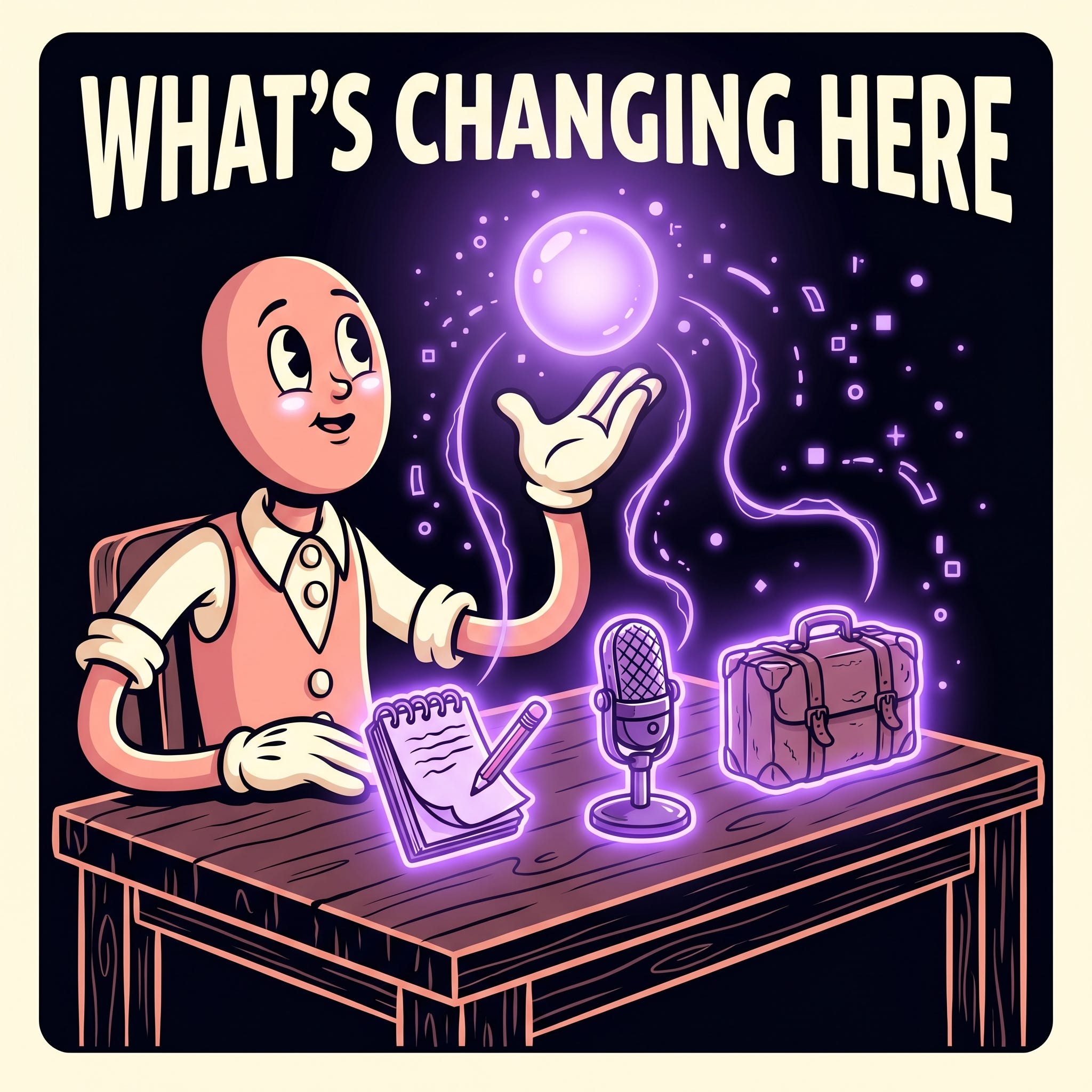
Finding Resonance. This is the podcast. Conversations with people who work at the seam between humans and machines. A sound artist who turned cooking noises into live electronic music. A documentary maker using VR to mediate peace between hostile tribes. A creator who runs twenty AI assistants and still posts thirty times a month. Same question every time, different lens. Episode one drops Thursday May 28.
A small fourth strand will be field notes. Short pieces from the actual seam, observations I can’t put in any of the other three boxes but that earn the page on their own.
Why I’m telling you this instead of just doing it
Because subscribing to something and then having the thing change without warning is rude. You signed up for a thing. You should know what I’m changing and what I’m not.
What I’m not changing: I will still write for adults. I will still treat your time as more valuable than my reach. I will still tell you when I’m unsure about something. The B2B work will still show up here, because it pays for the rest, and because it is genuinely some of the most interesting work I do.
What I am changing: more of what’s underneath. The podcast will come through this list. The Dojo work will come through this list. The conversations I’m having with artists and engineers and parents and teachers about what stays human when machines can do most of what we used to do will come through this list.
If any of that lands wrong for you, the unsubscribe button is at the bottom and I won’t be hurt. I’d rather lose readers who came for one thing and have them tell me, than keep them by accident.
What you’ll see this week
I’m running a small pacing experiment. Substack on Tuesdays. LinkedIn most weekdays, anchored around a few recurring questions I’m working through. Podcast every other Thursday, starting May 28.
The whole thing is calibrated so I can sustain it without becoming a content factory. The moment that happens, the work stops being honest, and you’ll feel it before I will.
The bigger commitment underneath all of this is the same one I’ve been making to my clients for the last few years. The goal is not to use AI more. The goal is to use it in a way that gives people back the parts of their work they actually wanted to spend time on in the first place.
That is the question. Everything I write here is one way of answering it.
Subscribe if any of this lands. Forward to one person if you know someone who would want to read it. Reply to this email if you want to tell me I’m wrong about something. That last one is genuinely my favorite kind of correspondence.
See you Tuesday.